

Cancer navigation has become essential in modern oncology. Navigators coordinate care, resolve barriers, and help patients start treatment faster. Yet many navigation programs still run on manual processes.
At XpediteMD, we regularly meet surgical, medical, and radiation oncology teams who tell us the same thing: they have heard about billable navigation CPT codes, but capturing those encounters is too cumbersome.
Most navigation interactions are short. A five minute phone call to schedule imaging. A quick insurance check. A brief patient follow up. EMRs rarely support these workflows well. In most systems, the only option is manual documentation, which means many encounters are never captured.
This is why oncology navigation needs dedicated digital infrastructure.
Why EMRs Fall Short
Electronic medical records such as Epic, Cerner or Veradigm are essential clinical infrastructure. They store patient charts, support documentation, and help with reporting and clinical billing. But they were not designed to run navigation programs or support navigation or navigation billing.
Evidence shows that EMRs can support coordination and analytics, but there is little evidence that they independently reduce cancer treatment delays or increase navigation revenue.
In reality, most delays in cancer care are driven by operational issues such as scheduling logistics, care coordination across providers, and social barriers affecting patients.
EMRs typically offer limited tools for managing these workflows. Navigators often rely on spreadsheets, inbox messages, or manual lists to track follow ups and outreach, activities that do little to support navigation billing. There is no evidence that EMRs alone significantly improve capture of navigation CPT codes or revenue from navigation activities.
In short, the EMR is the system of record, but not the system that runs navigation operations.
The Navigation Operations Center
Digital infrastructure also enables a navigation command center with a population level view of patients.
Navigators can see:
- Patients progressing normally
- Patients experiencing delays
- Outreach tasks and follow ups
- Navigation workload across the team
This transforms navigation from a reactive process into a coordinated operational function.
Many treatment delays are caused by non-clinical barriers. Platforms can track social determinants such as:
- Transportation challenges
- Financial barriers
- Housing instability
- Language or caregiver support needs
This allows navigators to intervene earlier and prevent care disruptions.
AI-Assisted Encounter Documentation & CPT Code Mapping
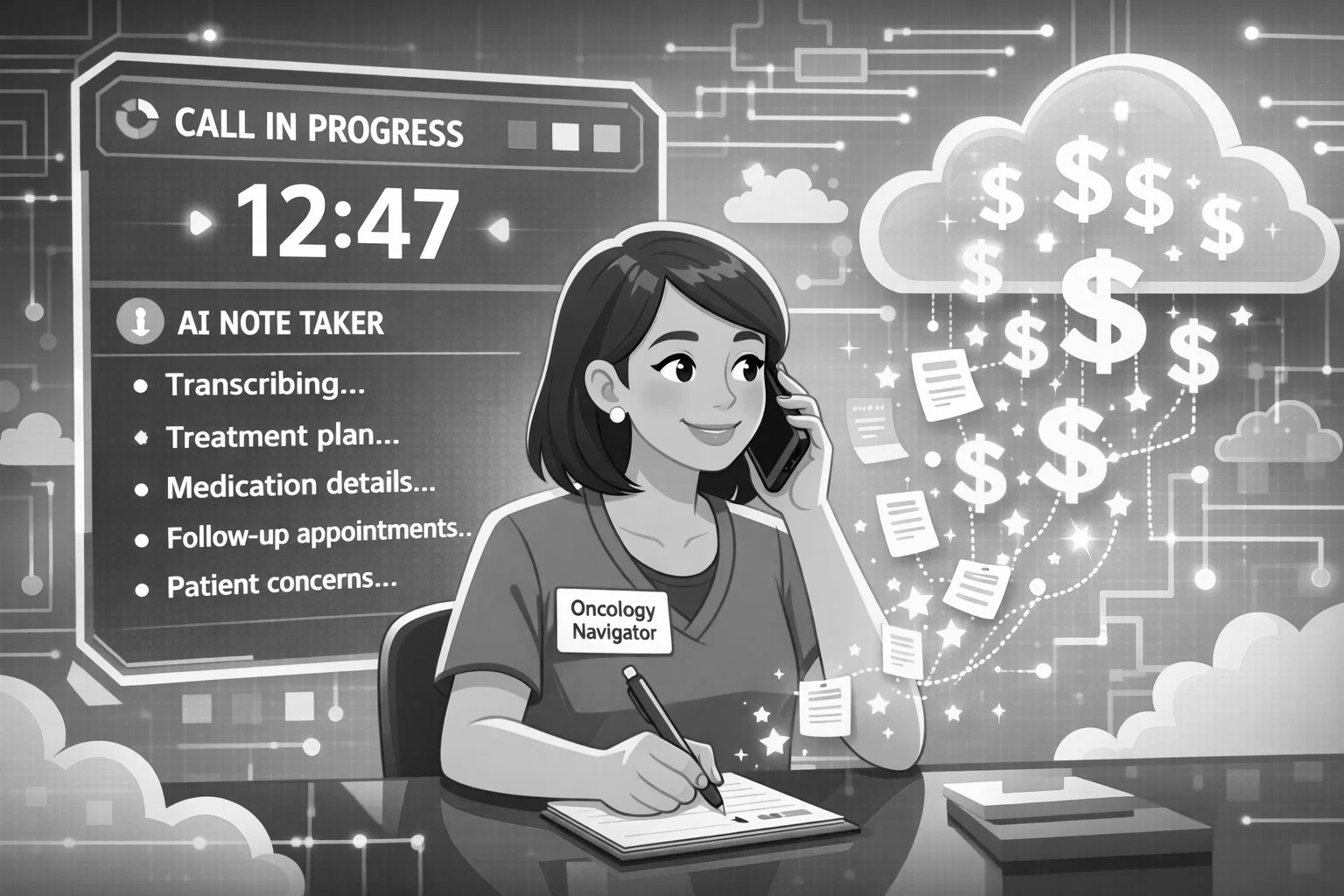
Documentation is one of the biggest barriers to capturing navigation work.
AI can assist by:
- Listening to phone outreach conversations
- Generating structured navigation notes
- Capturing key interventions
- Suggesting appropriate CPT codes
Navigators simply review and approve the note instead of writing it manually.
Technology can automatically map encounters to the appropriate CPT codes based on:
- The staff role
- Duration of the activity
- The type of service delivered
This ensures encounters are categorized correctly and prepared for billing.
Automated Billing Documentation
Beyond identifying CPT codes, navigation platforms can also produce the documentation required for billing and audits.
This can include:
- Structured encounter summaries
- CPT code justification tied to the activity performed
- Time tracking for staff interactions
- Exportable billing documentation for revenue cycle teams
By automatically generating billing-ready documentation, practices can convert everyday navigation work into compliant, reimbursable services.
Population Level Navigation Insights
Instead of managing patients one at a time, teams gain a population view of the entire navigation program.
This helps practices:
- Monitor time to treatment
- Identify systemic bottlenecks
- Prioritize high risk patients
- Measure program performance
Patient Enablement Through Technology
Patients can also benefit from digital tools.
Secure chat and mobile apps allow patients to:
- Ask questions between visits
- Report symptoms
- Request help from their navigator
- Stay connected throughout treatment
This improves both patient experience and care coordination.
From Navigation Tools to a Navigation Command Center
Patient navigation improves outcomes and reduces delays, but manual processes make it difficult to scale. Digital infrastructure brings together workflow automation, AI documentation, billing support, patient communication, and population monitoring into a single system.
At XpediteMD, we built the platform as a holistic navigation command center that helps oncology practices coordinate care, document encounters, produce billing documentation, and make navigation a sustainable part of clinical operations.




.svg)
.svg)
